Best Pressure Washer Gun for Detailing & Garage Use

Monika Andro
Garage & workshop equipment editor at WorkshopRanker • About the author
The best pressure washer gun search gets confusing fast because listings mix PSI claims, connector types, foam cannon compatibility, and “universal” language that often isn’t universal. In practice, the decision is simpler: choose a gun that matches your washer fittings, your hose setup, and how you actually wash—car detailing, driveway work, or general garage cleanup.
This WorkshopRanker guide focuses on the practical details that make a pressure washer gun feel great (or terrible) in real use: trigger feel and control, swivel usefulness, quick-connect compatibility, leak risk at adapters, and how the gun fits your detailing workflow.
When you move from a long wand to a short pressure washer gun, you usually gain control and reduce fatigue for close work. However, you may still want an extension wand for siding, roofs, or tall trucks.
Compare the first three reviewed products at a glance.
Disclosure: As an Amazon Associate, WorkshopRanker may earn from qualifying purchases. We may also earn from other affiliate links. This does not change what we recommend or how we compare workshop equipment.

Most buyers comparing the category
Balanced overall feature set

Value-focused buyers
Strong value for the intended use
Buyers who want stronger features
Higher-spec or more capable configuration
Jump to section
ToggleBefore you compare models, confirm your connection path from end to end. That one step prevents most “doesn’t fit” returns.
This page compares 5 workshop equipment options, focused on real online-buying decisions:
WorkshopRanker connects each comparison to the most relevant category hub, related equipment comparisons, and practical setup or specification guides so you can check the wider buying context before ordering.
| Image | Product | Best for | Key feature | View on Amazon |
|---|---|---|---|---|
| TOOLCY Pro Short Pressure Washer Gun 5000 PSI with 360° Swivel 3/8" InletTOOLCY Pro Short Pressure Washer Gun 5000 PSI with 360° Swivel 3/8" Inlet | Most buyers comparing the category | Balanced overall feature set | View on Amazon |
| Lichamp Short Pressure Washer Gun, 5000 PSILichamp Short Pressure Washer Gun, 5000 PSI | Value-focused buyers | Strong value for the intended use | View on Amazon |
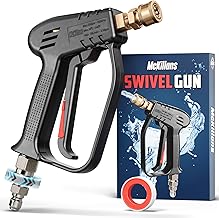
| McKillans® Short Pressure Washer Gun with Swivel – High Pressure Water Handle with 3/8" Male Plug and 1/4” Quick Connector Coupler – Power Washer Gun Compatible with Foam Cannon – Car Wash Foam GunMcKillans® Short Pressure Washer Gun with Swivel – High Pressure Water Handle with 3/8" Male Plug and 1/4” Quick Connector Coupler – Power Washer Gun Compatible with Foam Cannon – Car Wash Foam Gun | Buyers who want stronger features | Higher-spec or more capable configuration | View on Amazon |
 | YAMATIC Pressure Washer Gun with Extension Wand, 4000 PSI 5 NozzleYAMATIC Pressure Washer Gun with Extension Wand, 4000 PSI 5 Nozzle | A more specific use case | Useful fit for a narrower use case | View on Amazon |
 | Tool Daily Pressure Washer Short Gun with Mini Foam Cannon for Car Wash | 5 Power Washer Nozzle Tips, 1/4 Inch Quick Connector, 3600 PSITool Daily Pressure Washer Short Gun with Mini Foam Cannon for Car Wash | 5 Power Washer Nozzle Tips, 1/4 Inch Quick Connector, 3600 PSI | Buyers comparing another solid option | Alternative feature and price balance | View on Amazon |
A strong first pick if you want a short, detail-friendly pressure washer spray gun setup that’s easy to compare against the rest of the market.
Best for: Most buyers comparing the category
Key feature: Balanced overall feature set
Watch for: confirm the inlet/outlet fittings (especially 3/8″ vs 1/4″ quick connect), what adapters are included, and that the gun’s rated limits match your washer and hose.
| Pros ✅ | Cons ⚠️ |
|---|---|
| ✅ Great baseline choice for a short-gun garage/detailing workflow | ⚠️ You must match fittings to your hose/washer (don’t trust “universal”) |
| ✅ Swivel-style handling helps reduce hose fight during close work | ⚠️ A short gun can reduce reach unless you add an extension wand |
| ✅ Makes it easier to build a quick-connect, foam-cannon-ready setup | ⚠️ Adapter stack-ups can add leak points if you mix connector standards |
Why it’s a top pick: Most buyers get the best results from a gun that integrates cleanly with their hose and quick-connect setup and feels controllable for detailing. Because this pick targets that reality, it works as a solid all-around starting point.
Decision bullets
WorkshopRanker tip: If you’re building a detailing setup, read Pressure Washer Quick Connect Sizes before ordering adapters so your gun, foam cannon, nozzles, and hose all speak the same “connector language.”
A smart value pick when you want a capable short gun, but you don’t want to pay extra for features you won’t use.
Best for: Value-focused buyers
Key feature: Strong value for the intended use
Watch for: verify what fittings and quick-connects come in the box. If you need to buy multiple adapters, the “value” advantage can disappear.
| Pros ✅ | Cons ⚠️ |
|---|---|
| ✅ Strong choice when budget matters but you still want a short-gun setup | ⚠️ May require extra adapters depending on your hose/washer style |
| ✅ Good fit for occasional to regular home garage use | ⚠️ Don’t assume the same connector standard as your current wand |
| ✅ Keeps the setup simple if it matches your fittings out of the box | ⚠️ Value depends on included accessories and long-term parts availability |
Why it’s a top pick: If you want a straightforward short pressure washer gun for typical home use, value comes from correct fit and low adapter drama. Instead of chasing maximum PSI numbers you’ll never reach with your machine, prioritize compatibility and control.
Decision bullets
WorkshopRanker tip: A “cheap” gun becomes expensive if it forces you into a stack of adapters. Aim for one clean connection path from hose → gun → nozzle/foam cannon.
A strong match for a car detailing pressure washer gun setup where hose management and foam cannon compatibility are priorities.
Best for: Buyers who want stronger features
Key feature: Higher-spec or more capable configuration
Watch for: confirm the exact plug/coupler orientation you need for your foam cannon and nozzles, and verify whether any additional adapters are required for your hose end.
| Pros ✅ | Cons ⚠️ |
|---|---|
| ✅ Swivel-style handling helps reduce kinks and wrist fatigue while washing | ⚠️ Still requires connector verification (3/8″ vs 1/4″ QC vs M22) |
| ✅ Designed around common detailing add-ons like foam cannons | ⚠️ Extra fittings can add small leak points if you mix standards |
| ✅ Great fit for repeatable car wash routines in a garage/driveway | ⚠️ Short guns trade reach for control—plan for an extension if needed |
Why it’s a top pick: In detailing, the best-feeling setup is often the one that moves smoothly around the vehicle without fighting the hose. With frequent washes, a swivel-style gun can be a real quality-of-life upgrade.
Decision bullets
WorkshopRanker tip: If you’re debating short gun vs wand, use Short Pressure Washer Gun Vs Wand to match your choice to your most common jobs (cars vs siding vs concrete).
The best pick here when you want more reach and flexibility without building a separate extension-wand setup from scratch.
Best for: A more specific use case
Key feature: Useful fit for a narrower use case
Watch for: confirm how the extension wand interfaces with the gun and tips, and verify the included nozzle types match your intended surfaces (paint, wheels, concrete, siding).
| Pros ✅ | Cons ⚠️ |
|---|---|
| ✅ Adds reach/versatility without forcing you to buy separate parts immediately | ⚠️ More pieces can mean more connections to verify and potentially leak |
| ✅ Useful for mixed jobs: vehicles + driveway + quick house rinse | ⚠️ Not as compact as a pure short-gun detailing setup |
| ✅ Helps new buyers get functional coverage with included nozzle options | ⚠️ Make sure the included nozzle set matches your preferred quick-connect standard |
Why it’s a top pick: The most common regret with a short pressure washer gun is reach. If you routinely rinse higher panels, larger trucks/SUVs, or do occasional siding/driveway work, an included extension wand can be the difference between “nice upgrade” and “why did I buy this?”
Decision bullets
WorkshopRanker tip: If you want a short gun for detailing but need occasional reach, this “hybrid” approach often beats swapping back to a long factory wand every time.
A convenient bundle pick if you want to get washing quickly with a short gun plus common add-ons for car washing.
Best for: Buyers comparing another solid option
Key feature: Alternative feature and price balance
Watch for: confirm the mini foam cannon connection type and whether the included tips match your preferred quick-connect standard, so you aren’t re-buying parts.
| Pros ✅ | Cons ⚠️ |
|---|---|
| ✅ Bundle convenience: short gun + foam + tips in one purchase | ⚠️ Bundle value depends on whether the connectors match your current hose/washer |
| ✅ Great for occasional DIY car washes and quick driveway rinses | ⚠️ You may still prefer a larger foam cannon or different tip set later |
| ✅ Helps avoid piecemeal buying when you’re building a first setup | ⚠️ Verify replacement parts/consumables for the foam bottle and fittings |
Why it’s a top pick: If your goal is a simple, repeatable “wash the car this weekend” setup, bundles can save time and reduce the number of separate compatibility decisions—as long as the connector standard matches your hose and washer.
Decision bullets
WorkshopRanker tip: If you’re washing vehicles, prioritize control and safe standoff distance over the harshest tip/angle. Paint and trim rarely need maximum aggression.
To recommend equipment that makes sense for online buyers, we focus on what changes real use and ownership:
Don’t buy this if…
Buy this if…
With a pressure washer gun, “duty cycle” is mostly about how long you’ll hold the trigger and how much you’ll move around the job. Frequent car washes and detailing benefit from a short gun and good hose management. For mixed home use (cars + siding + concrete), an extension wand option and a tip set that covers multiple spray patterns often matter more.
With a pressure washer spray gun, your washer and nozzle determine most real cleaning performance. Because of that, the gun choice is mainly about control, safety, and compatibility. Use ratings as a safety check, then prioritize the fit and features that reduce frustration.
Most buying mistakes here are connector-related. Before ordering, identify what you have on both ends: washer outlet → hose → gun inlet, then gun outlet → tips/foam cannon. Use Pressure Washer Quick Connect Sizes to avoid mismatched quick connects and thread standards.
If you’re unsure whether you should run a short gun or a traditional wand for your mix of jobs, use Short Pressure Washer Gun Vs Wand to choose based on reach, control, and safety on paint and trim.
Ergonomics matter because you’re holding the tool under pressure. Look for a comfortable grip, a trigger that won’t punish your hand during longer washes, and a setup that avoids awkward wrist angles. Bundled tips and foam accessories can help, but only if they match your connector standard.
Pressure washer guns are simple, but leaks happen at O-rings, quick-connects, and adapter stacks. To reduce issues, keep spare O-rings, avoid over-tightening threaded fittings, and store tips so grit doesn’t get into the couplers. When you buy a foam accessory, verify bottle replacement availability and how it seals.
High-pressure water can injure you and damage surfaces fast. Follow the manufacturer’s rated limits and instructions, keep hands away from the spray stream, and use appropriate PPE. For paint and trim, choose the correct nozzle and distance; for ladders/rooflines, avoid unsafe positioning and follow local safety best practices.
| Concern | Likely cause | What to check before buying |
|---|---|---|
| The equipment feels underpowered or undersized | The selected model does not match the real workload or duty cycle | Compare category-specific output, capacity, operating range, and duty requirements |
| The product does not fit the workspace or existing setup | Dimensions, mounting, fittings, voltage, or compatibility were overlooked | Verify measurements, connectors, power requirements, clearances, and adapters before ordering |
| The tool is awkward or slow to use repeatedly | Poor ergonomics, setup time, weight, controls, or workflow fit | Compare handling, adjustment, portability, setup steps, and storage |
| Performance drops during longer jobs | Duty-cycle, heat, battery, air, water, power, or capacity limits are being reached | Check continuous-use limits and the supporting supply requirements for the category |
| Ownership becomes expensive | Consumables, accessories, maintenance, or replacement parts cost more than expected | Check recurring items, service access, part availability, and required add-ons |
| Results are inconsistent | Wrong setup, poor adjustment range, weak rigidity, or unsuitable specification | Compare control, calibration, stability, adjustment, and repeatability requirements |
| The feature list feels confusing | Marketing terms and ratings are not directly comparable | Return to the real job: workload, useful specs, compatibility, setup, maintenance, and safety limits |
Use the related WorkshopRanker guides below for deeper category-specific sizing, compatibility, setup, maintenance, and safety questions.
If you’re switching from a wand to a short gun (or deciding whether you should), start with Short Pressure Washer Gun Vs Wand and then confirm your connectors with Pressure Washer Quick Connect Sizes so you don’t end up with mismatched fittings.
Start with the exact job (car detailing, driveway, siding), your normal runtime, and your compatibility requirements. For a pressure washer gun, the biggest differentiators are connector fit (M22/3/8″/1/4″ QC), swivel usefulness, reach needs, and how cleanly it integrates with your tips and foam cannon.
Match the gun’s rating to your pressure washer, but don’t overbuy based on a maximum PSI number alone. Your machine and nozzle choice drive real cleaning. For paint and trim, control and safe distance matter more than maximum output.
Trust specifications that affect fit and safe use: connector type, rated pressure limits, and what’s included (couplers, plugs, tips, extension). Treat “universal” claims cautiously and verify sizes using Pressure Washer Quick Connect Sizes.
First, check your hose end type and your washer outlet type. Next, confirm what your accessories require (especially foam cannons and 1/4″ quick-connect tips). Finally, verify whether you need M22 adapters, 3/8″ fittings, or quick-connect plugs/couplers, and whether they’re included.
It can be if you wash frequently and care about ergonomics, hose management (like a swivel), and long-term serviceability. For occasional DIY use, a simpler gun that matches your connectors cleanly is often the better value.
Yes—if the listing clearly states connector types, what fittings are included, and return terms. Pressure washer guns are small, but compatibility mistakes are common, so verify your setup first (again: Pressure Washer Quick Connect Sizes).
For most buyers: quick-connect compatibility, a comfortable trigger/grip, swivel (if you hate hose twist), and the right reach strategy (short gun for control, extension wand for height/distance). Bundled tips/foam cannons matter only if they match your connector standard.
Confirm the exact model, connector types on both ends, included adapters, and whether you need an extension for your typical jobs. If your water supply is weak, also sanity-check your overall system using Minimum Water Pressure Pressure Washer and see Best Pressure Washer For Low Water Pressure for machine options.
If you want the safest first choice, start with Pick #1 because it gives you the cleanest baseline for job fit, useful specifications, compatibility, setup, and ownership risk.
Choose Pick #2 when its focused advantage solves your main constraint better than the overall pick.
Choose Pick #3 when a more specialized performance or workflow profile matches the job.
Choose Pick #4 when its capacity, format, or compatibility is the better fit for your workspace.
Choose Pick #5 when value, simplicity, or a narrower use case matters more than premium extras.
For more context, continue with the related WorkshopRanker category hub and guides listed above.