Best Portable Drill Guide for Straight & Angled Holes

Monika Andro
Garage & workshop equipment editor at WorkshopRanker • About the author
Searching for the best portable drill guide gets confusing fast because listings mix drill-press language with jig language, and many products look similar until you check angle control, bushing quality, clamping, and how stable the guide stays under load. In practice, the decision is simpler: choose the guide that matches your materials, hole sizes, angle needs, and how repeatable you need results to be.
This WorkshopRanker guide focuses on what matters for a portable drill guide: keeping a hand drill square for straight holes, dialing in angles when needed, and avoiding common frustrations like wandering starts, flex, awkward clamping, and messy chips.
Use this page to compare five options and decide which drill guide jig fits your workflow—woodworking, garage projects, or jobsite work—without assuming the biggest feature list automatically drills the straightest hole.
Compare the first three reviewed products at a glance.
Disclosure: As an Amazon Associate, WorkshopRanker may earn from qualifying purchases. We may also earn from other affiliate links. This does not change what we recommend or how we compare workshop equipment.
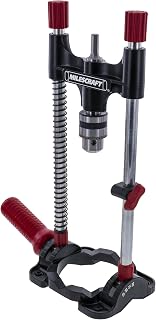
Most buyers comparing the category
Balanced overall feature set
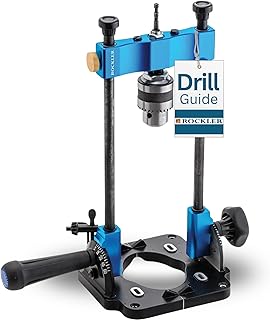
Value-focused buyers
Strong value for the intended use

Buyers who want stronger features
Higher-spec or more capable configuration
Jump to section
ToggleThis page compares 5 workshop equipment options, focused on real online-buying decisions:
WorkshopRanker connects each comparison to the most relevant category hub, related equipment comparisons, and practical setup or specification guides. That way, you can check the wider buying context before ordering.
| Image | Product | Best for | Key feature | View on Amazon |
|---|---|---|---|---|
| Milescraft DrillMate Portable Drill Guide Adjustable Precision Drilling JigMilescraft DrillMate Portable Drill Guide Adjustable Precision Drilling Jig | Most buyers comparing the category | Balanced overall feature set | View on Amazon |
| Rockler Portable Drill Guide with Angle Scale & Chuck Key, 0-60 AngleRockler Portable Drill Guide with Angle Scale & Chuck Key, 0-60 Angle | Value-focused buyers | Strong value for the intended use | View on Amazon |
| Kreg Portable Drilling Guide, 6 Hardened Drill Guides, KDG-6000Kreg Portable Drilling Guide, 6 Hardened Drill Guides, KDG-6000 | Buyers who want stronger features | Higher-spec or more capable configuration | View on Amazon |
 | Portable Drill Guide with Dust Collection Port for Precision AngledPortable Drill Guide with Dust Collection Port for Precision Angled | A more specific use case | Useful fit for a narrower use case | View on Amazon |
 | Portable Multi-Angle Drill Guide, 60 Degree Adjustable StandPortable Multi-Angle Drill Guide, 60 Degree Adjustable Stand | Buyers comparing another solid option | Alternative feature and price balance | View on Amazon |
A strong first pick for buyers who want an all-around match for the job, workspace, and real-world requirements without getting lost in headline specs.
Best for: Most buyers comparing the category
Key feature: Balanced overall feature set
Watch for: confirm the drill’s fit/attachment method, the angle range you need (if any), and how you will clamp or stabilize the base on your workpiece.
| Pros ✅ | Cons ⚠️ |
|---|---|
| ✅ Versatile baseline for straight holes and general shop drilling tasks | ⚠️ Accuracy depends on setup, clamping, and keeping the base stable |
| ✅ Helps turn a handheld drill into a more controlled drilling station | ⚠️ Not a substitute for a full drill press when you need maximum rigidity |
| ✅ Practical pick for mixed DIY and woodworking use | ⚠️ Verify drill compatibility and usable travel for your hole depth needs |
Why it’s a top pick: For most buyers, the “best overall” portable drill guide is the one that stays stable, adjusts predictably, and fits your drill and clamping situation. As a result, this pick works well as a benchmark for comparing the more angle-focused, bushing-focused, or cleanup-focused options below.
Decision bullets
WorkshopRanker tip: A drill guide’s real accuracy comes from rigidity plus repeatable setup. If you can’t clamp the work, prioritize a guide/base design that’s easy to stabilize.
This option earns its place for buyers whose priorities differ from the first pick and who want a stronger fit for a specific workflow or use case.
Best for: Value-focused buyers
Key feature: Strong value for the intended use
Watch for: confirm the angle adjustment markings match how you work (layout lines vs. measured angles), and verify how the drill attaches and stays aligned through the stroke.
| Pros ✅ | Cons ⚠️ |
|---|---|
| ✅ Better fit for workflows that involve repeated angled holes | ⚠️ Angle accuracy still depends on clamping and preventing base movement |
| ✅ Helps reduce guesswork when setting common drilling angles | ⚠️ Verify usable clearance for your drill/bit length at steeper angles |
| ✅ Strong alternative to the overall pick when angle control is the main constraint | ⚠️ Not all “0–60” use cases are equal—confirm your target angle range and access |
Why it’s a top pick: If your “must have” is controlled angle drilling (instead of just “make my drill go straight”), then angle scale usability and repeatability matter more than extra features. For that reason, this pick targets that specific constraint.
Decision bullets
WorkshopRanker tip: For angled holes, do a quick clearance “dry run” in your head: drill length + bit length + workpiece thickness + clamp position. That’s where many portable guides get frustrating.
A practical shortlist option for buyers who care about repeatable results and the specs that matter most for this category.
Best for: Buyers who want stronger features
Key feature: Higher-spec or more capable configuration
Watch for: confirm the bushing/guide sizes match the bits you use most, and verify how you’ll register the jig on your layout marks for consistent starts.
| Pros ✅ | Cons ⚠️ |
|---|---|
| ✅ Strong choice for a drill guide for straight holes with repeatable alignment | ⚠️ Typically less flexible for deep drilling than a full travel-column style guide |
| ✅ Hardened guides can help reduce wear vs. soft guide holes over time | ⚠️ You must match bushing sizes to your most-used bit diameters |
| ✅ Good fit for woodworking layout-and-drill workflows | ⚠️ Registration/clamping method matters—plan workholding so the jig doesn’t creep |
Why it’s a top pick: When your main goal is straight, clean, repeatable holes (common in a drill guide for woodworking), hardened bushings and a simple registration method can matter more than a large angle scale or a drill-press-like plunge mechanism.
Decision bullets
WorkshopRanker tip: For straight holes, your biggest accuracy gains usually come from center-punching (or an awl), using the right bit type for the material, and preventing the jig from shifting at the start.
This pick makes sense when fit, compatibility, size, installation, portability, or workspace constraints matter as much as raw performance.
Best for: A more specific use case
Key feature: Useful fit for a narrower use case
Watch for: verify what vacuum/dust hose size it’s intended to accept (if any), and confirm the dust port won’t interfere with clamping or tight drilling positions.
| Pros ✅ | Cons ⚠️ |
|---|---|
| ✅ Cleaner workflow when drilling creates lots of dust/chips | ⚠️ Dust collection only helps if you can connect it to your shop vac/extractor |
| ✅ Can improve visibility at the drilling point by reducing chip buildup | ⚠️ Added port/hose can reduce maneuverability in tight spaces |
| ✅ Good fit for bench-top use where cleanup time matters | ⚠️ Verify clamping and clearance with the dust hose attached |
Why it’s a top pick: A drill guide jig that keeps dust under control can be the difference between “I use it all the time” and “it’s a mess so I avoid it.” That matters most with sheet goods and sanding-prone materials where chips quickly hide your layout marks.
Decision bullets
WorkshopRanker tip: If you’re drilling MDF/plywood indoors, prioritize dust control and appropriate PPE. Always follow the manufacturer’s instructions for safe use and chip extraction.
A useful alternative for buyers who want a different balance of capability, ownership cost, or convenience than the options above.
Best for: Buyers comparing another solid option
Key feature: Alternative feature and price balance
Watch for: confirm the stand’s stability and clamping options are adequate for your bit sizes and materials. Value guides can work well, but they’re less forgiving if the base shifts.
| Pros ✅ | Cons ⚠️ |
|---|---|
| ✅ Adds an affordable multi-angle option to the shortlist | ⚠️ Value stands can have more flex—setup technique matters |
| ✅ Can be the smarter buy for occasional angled drilling tasks | ⚠️ Verify drill clearance and usable travel at steeper angles |
| ✅ Useful for DIYers who need angles without buying a full drill press | ⚠️ Check included hardware/accessories and whether you’ll need clamps or adapters |
Why it’s a top pick: Value-focused drill guides can be the right call when you need occasional angle drilling or general guidance without paying for premium mechanisms. Before you buy, be honest about your workload and how much rigidity you need for larger bits or harder materials.
Decision bullets
WorkshopRanker tip: A value drill guide becomes “good” when you pair it with good workholding. Clamp the work and use sharp bits; don’t try to muscle a dull bit straight.
To recommend equipment that makes sense for online buyers, we focus on what changes real use and ownership:
Don’t buy this if…
Buy this if…
The intended job usually matters more than the brand name. Occasional DIY use, repeated home-shop work, and jobsite drilling create different demands for rigidity, angle repeatability, bushing wear, and setup speed.
With a portable drill press guide or drill guide jig, the “specs that matter” are less about motor power (your drill provides that) and more about how well the guide controls the bit. First, focus on stability and guide/bushing durability. Next, look at angle-setting repeatability and the clearance/travel you need for your hole depth.
Before ordering, verify the details that can make an otherwise good drill guide for woodworking unusable: drill collar/attachment style, chuck clearance at angles, base footprint vs. your workpiece, and whether you can clamp it securely in your typical setups.
If two products solve the same job differently, use the related WorkshopRanker comparison and setup guides supplied with the page to understand the tradeoff before buying.
Look for a guide that’s easy to hold square, easy to clamp, and easy to adjust without slipping. Before checkout, verify what’s included (keys, bushings, alignment aids, dust port adapters) so you don’t get stuck mid-project waiting on a small missing part.
Portable drill guides are simple tools, but wear points still matter. For example, check whether bushings are hardened or replaceable (if applicable), whether sliding columns need cleaning/lube, and how bulky the base is to store. If you plan to use dust extraction, confirm you can source an adapter that fits your vacuum hose.
Drilling involves rotating tools, sharp bits, heat, and chip ejection. Follow the manufacturer’s instructions, keep hands clear, clamp the work when possible, and use appropriate PPE. Finally, verify operating limits and setup guidance in the manual—especially for angled drilling and larger bits that increase torque and grab risk.
| Concern | Likely cause | What to check before buying |
|---|---|---|
| The hole starts off-center or the bit wanders | Weak registration on the mark, dull/wrong bit type, or the guide shifts at the start | Look for stable base/clamping options and guide/bushing design; plan workholding and bit choice |
| Angled holes don’t match the intended angle | Angle mechanism slips or is hard to set consistently | Check how angles are set/locked and whether you can clamp the base securely while drilling |
| The product doesn’t fit the drill or feels awkward | Drill body/chuck clearance or attachment method wasn’t checked | Verify drill compatibility notes, collar/attachment style, and clearance at your common angles |
| It’s messy and hard to see the mark | Chips pack around the bit and layout lines | Consider a model with dust collection support; verify hose/adapter compatibility |
| Results vary from hole to hole | Setup changes, base creep, or inconsistent pressure/technique | Prioritize repeatable registration and clamping; check whether the design supports consistent starts |
| It feels like more hassle than it’s worth | Wrong tool for the frequency/precision needed | Decide whether you actually need a drill press; compare Portable Drill Press Vs Drill Guide |
| You keep comparing it to a drill press | Expectations mismatch (portability vs. rigidity) | Consider stepping up to a drill press if you need maximum precision; see Best Portable Drill Press |
Use the related WorkshopRanker guides below for deeper category-specific sizing, compatibility, setup, maintenance, and safety questions.
If you’re considering moving up to a true drill press for more rigidity and repeatability, compare Best Portable Drill Press and use What Size Drill Press For Woodworking to sanity-check sizing before you buy.
Start with the exact job: straight holes, angled holes, or both. Next, focus on stability (base + clamping), repeatability (how it registers on your mark), and compatibility with your drill and typical bit lengths. Finally, check parts/support and any wear points like bushings or sliding columns.
For a portable drill guide, “capacity” is mostly about clearance and usable travel: can your drill and bit reach the depth you need without the chuck hitting the guide? Choose enough for your normal work, but don’t overpay for features you won’t set up and use.
Trust specs that describe physical limits you can verify: angle range, included bushing sizes (if applicable), and compatibility notes. However, be cautious with vague “precision” claims—real-world results depend heavily on clamping, bit choice, and technique.
Confirm how your drill attaches (collar/holder style), chuck clearance at the angles you’ll use, and whether your common bit lengths will fit without bottoming out. If the guide uses bushings, confirm the included sizes match your most-used drill bits.
It can be if you drill frequently, use larger bits, or need repeatable accuracy in hardwoods and joinery work. On the other hand, if you only need occasional guidance for DIY projects, a simpler drill guide jig can be better value—provided you clamp well and accept slower setup.
Yes, if the listing clearly shows the attachment method, included accessories (keys, bushings, adapters), and how angles are set/locked. Before you order, also check return terms and whether replacement parts are available if something arrives damaged.
For most buyers: a stable base, easy clamping, repeatable alignment on your mark, and enough clearance/travel for your drilling depth. Angle features matter only if you drill angles often. Dust collection matters most for indoor woodworking and sheet goods.
Check drill compatibility, angle range (if needed), bushing sizes (if included), and drill/bit clearance for your typical hole depth. Then scan reviews for repeated issues like slipping bases, flex, or hard-to-hold angle settings.
If you want the safest first choice, start with Pick #1 because it gives you a clean baseline for job fit, stability, angle capability, and ownership risk.
For more context, continue with the related WorkshopRanker category hub and guides listed above.