Best Chisel Sharpening Jig for Repeatable Woodworking Edges

Monika Andro
Garage & workshop equipment editor at WorkshopRanker • About the author
Searching for the best chisel sharpening jig gets confusing fast because listings mix jigs, a chisel honing guide, bundled stones, and “all-in-one” kits that may not match your sharpening method. Instead, focus on three basics: your chisel and plane iron sizes, your stones (water stones/oil stones/diamond plates), and the repeatable bevel angles you actually need.
This WorkshopRanker guide sticks to what matters in real use: repeatability, clamping stability, adjustment range, stone compatibility, and workflow. That way, you can stop guessing and buy a sharpening guide for chisels that fits your bench and your tools.
If you’re new to sharpening, keep it simple: first pick the bevel angle you want to repeat, then choose a woodworking sharpening jig that makes that angle easy to set and hard to mess up.
Compare the first three reviewed products at a glance.
Disclosure: As an Amazon Associate, WorkshopRanker may earn from qualifying purchases. We may also earn from other affiliate links. This does not change what we recommend or how we compare workshop equipment.

Most buyers comparing the category
Balanced overall feature set

Value-focused buyers
Strong value for the intended use

Buyers who want stronger features
Higher-spec or more capable configuration
Jump to section
ToggleThis page compares 5 workshop equipment options, focused on real online-buying decisions:
WorkshopRanker connects each comparison to the most relevant category hub, related equipment comparisons, and practical setup or specification guides. Use those links to confirm the wider buying context before you order.
| Image | Product | Best for | Key feature | View on Amazon |
|---|---|---|---|---|
| Saker Chisel Sharpening Jig, Chisel Sharpener Wood Honing GuideSaker Chisel Sharpening Jig, Chisel Sharpener Wood Honing Guide | Most buyers comparing the category | Balanced overall feature set | View on Amazon |
| G Sharp Edge Chisel Sharpener – Chisel Sharpening Kit – Sharpens Blades from 3mm to 85mm Wide – Light, Robust and Easily TransportedG Sharp Edge Chisel Sharpener – Chisel Sharpening Kit – Sharpens Blades from 3mm to 85mm Wide – Light, Robust and Easily Transported | Value-focused buyers | Strong value for the intended use | View on Amazon |
| Chisel Sharpening Jig, Adjustable Angle Honing Guide 5/32″-3″Chisel Sharpening Jig, Adjustable Angle Honing Guide 5/32″-3″ | Buyers who want stronger features | Higher-spec or more capable configuration | View on Amazon |
 | Chisel Sharpening Jig – Fixed Angle Whetstone Set with Polishing Stone & Grinding Frame | Adjustable Sharpener for Woodworking Chisels & PlanesChisel Sharpening Jig – Fixed Angle Whetstone Set with Polishing Stone & Grinding Frame | Adjustable Sharpener for Woodworking Chisels & Planes | A more specific use case | Useful fit for a narrower use case | View on Amazon |
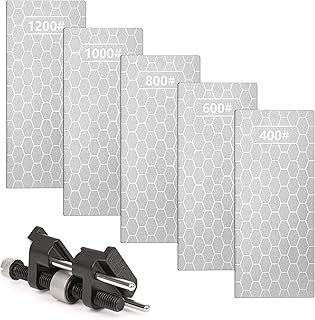 | Chisel Sharpening Jig with Honing Guide & 5 Diamond Sharpening StonesChisel Sharpening Jig with Honing Guide & 5 Diamond Sharpening Stones | Buyers comparing another solid option | Alternative feature and price balance | View on Amazon |
A strong first pick if you want a straightforward chisel sharpening jig for angle setting, clamping, and repeatability. It also avoids locking you into a specific stone system.
Best for: Most buyers comparing the category
Key feature: Balanced overall feature set
Watch for: confirm the clamp range (your narrowest and widest chisels), whether it also fits plane irons, and that the roller design clears your stone/plate width and sharpening station.
| Pros ✅ | Cons ⚠️ |
|---|---|
| ✅ Practical baseline for comparing other jigs and kits | ⚠️ Angle accuracy still depends on setup and consistent technique |
| ✅ Good fit for buyers who want repeatability without a complicated system | ⚠️ Verify your stone/plate width and clearance with the roller and clamp |
| ✅ Useful for building a consistent sharpening routine | ⚠️ Check what’s included (jig only vs any angle aids/accessories) |
Why it’s a top pick: For most buyers, the “best” sharpening guide for chisels is the one that repeats a correct bevel angle while holding the tool securely and rolling smoothly on the stone. This pick is a sensible baseline for that core job.
Decision bullets
WorkshopRanker tip: A jig can’t compensate for an unflattened stone or a rushed setup. Keep your stone flat, and use the same projection/angle-setting routine every time.
This premium-style option suits buyers who want a more guided sharpening workflow. In practice, it’s closer to a system than a basic clamp-and-roll honing guide.
Best for: Value-focused buyers
Key feature: Strong value for the intended use
Watch for: verify the supported blade width range for your chisels and plane irons, and confirm how the system sets angles (and whether it matches the angles you actually use).
| Pros ✅ | Cons ⚠️ |
|---|---|
| ✅ Strong option for buyers who prioritize a more structured sharpening routine | ⚠️ Make sure your tool widths fall inside the supported range |
| ✅ Can reduce guesswork once you learn its angle-setting method | ⚠️ System-style designs can be less flexible with odd tool shapes |
| ✅ Good fit for repeatable results when paired with consistent stones and technique | ⚠️ Verify what’s included vs what you still need (stones, strop, flattening tools) |
Why it’s a top pick: A premium sharpening setup can be worth it when it reduces setup friction and helps you repeat the same results across multiple tools. That matters most if you sharpen often and want a consistent process.
Decision bullets
WorkshopRanker tip: “Premium” only pays off if it saves time or improves repeatability on the tools you actually own. Verify fit first, then pay for convenience.
A strong choice when you need an angle-guide approach that accommodates wider tools, including many plane irons. At the same time, it keeps the honing motion repeatable.
Best for: Buyers who want stronger features
Key feature: Higher-spec or more capable configuration
Watch for: confirm the maximum width you need to clamp, plus whether the clamping faces keep wide irons square (skew here shows up as an uneven edge).
| Pros ✅ | Cons ⚠️ |
|---|---|
| ✅ Better fit for wider tools than many basic honing guides | ⚠️ Wide tools magnify squareness/setup errors—take time to align |
| ✅ Supports a repeatable sharpening routine when set up consistently | ⚠️ Verify stone width/clearance so the roller tracks smoothly |
| ✅ Good option if you switch between chisels and plane irons | ⚠️ Adjustment range is only useful if it matches your target angles |
Why it’s a top pick: If you own wider chisels or sharpen plane irons often, a “standard” jig can be the wrong tool because it won’t clamp securely or square. This pick targets that compatibility problem.
Decision bullets
WorkshopRanker tip: When skewed edges show up, slow down and align on purpose. Lightly snug the clamp, square the edge to the jig body, then tighten fully before honing.
This value-leaning kit suits buyers who want a more complete starting setup (jig + abrasives/accessories). As a result, you can get to a working edge without building a full sharpening station from scratch.
Best for: A more specific use case
Key feature: Useful fit for a narrower use case
Watch for: confirm what the kit includes (and the abrasive type), whether replacements are easy to source, and whether the fixed-angle approach matches your preferred bevel angles.
| Pros ✅ | Cons ⚠️ |
|---|---|
| ✅ Good entry point if you want a bundled sharpening setup | ⚠️ Kits can lock you into specific stones or formats you may outgrow |
| ✅ Can reduce the number of separate items you need to buy | ⚠️ Verify replacement stones/abrasives are available and practical |
| ✅ Helpful for buyers starting from “no sharpening gear” | ⚠️ Fixed-angle or limited-angle systems may not match every tool’s needs |
Why it’s a top pick: For many buyers, the biggest blocker isn’t choosing a jig. The real issue is having a complete path to a sharp edge, so a kit-style purchase can be the right move when you want fewer separate decisions.
Decision bullets
WorkshopRanker tip: Kits work best when they reduce friction. If you already own quality stones/plates, you may be better off buying a jig that integrates cleanly with what you have.
This all-in-one diamond-plate style set fits buyers who want the convenience of diamond stones paired with a honing guide. Because diamond plates are quick to deploy, it can suit a lower-mess, lower-soak sharpening station.
Best for: Buyers comparing another solid option
Key feature: Alternative feature and price balance
Watch for: confirm the included diamond grits match your needs (repair vs honing vs polishing), and verify plate size/width is comfortable for your widest tools.
| Pros ✅ | Cons ⚠️ |
|---|---|
| ✅ Convenient bundle if you want diamond plates plus a guide | ⚠️ Verify plate size and grit selection fits your sharpening routine |
| ✅ Can be a practical “single purchase” for a basic sharpening station | ⚠️ Diamond plates vary by quality—check buyer feedback for longevity |
| ✅ Helpful for buyers who prefer less soaking and simpler cleanup | ⚠️ Make sure the guide and plates work well together for stable strokes |
Why it’s a top pick: Diamond plates can be a smart match for many shops because they’re quick to deploy and don’t require soaking. When plates come bundled with a chisel honing guide, you also reduce the “what else do I need?” problem for first-time buyers.
Decision bullets
WorkshopRanker tip: Your sharpening results depend on the full system: a flat abrasive surface, consistent angle setting, and a stable stroke. Don’t evaluate a jig or a stone in isolation.
To recommend equipment that makes sense for online buyers, we focus on what changes real use and ownership:
Don’t buy this if…
Buy this if…
Your sharpening routine determines the right jig more than the brand name. Occasional DIY touch-ups can work fine with a simple chisel honing guide, but frequent sharpening (or multiple tools) usually benefits from faster, more repeatable angle setting and more stable clamping.
With a chisel sharpening jig, “performance” mostly means repeatability and stability. Focus on the tool width range it clamps, how it sets angles, and how smoothly it rolls on your chosen abrasive surface.
These are hand tools, but compatibility still makes or breaks the purchase. Measure your tool widths, confirm plane-iron support if needed, and verify your stones/plates are wide enough for the jig’s roller to stay supported during the stroke.
When two products solve the same job differently, use the related WorkshopRanker comparison and setup guides supplied with the page. That extra step helps you understand the tradeoff before buying.
Look for a clamp that holds without slipping, adjustment hardware that stays put, and a roller that tracks smoothly. Before you buy a kit, confirm what abrasives are included and whether the kit supports a sensible progression from coarse shaping to fine honing.
The jig itself is usually low-maintenance, but your consumables are not. Stones may need flattening, diamond plates vary in longevity, and rollers/clamps can wear or loosen over time. Plan ahead by checking replacement availability and setting up storage so the jig and stones stay clean and protected.
Sharpening involves sharp edges and repetitive motion, so follow the manufacturer’s instructions. Keep stones/plates secured so they can’t slide, and use sensible PPE when appropriate. Finally, confirm return terms and support, especially if replacement stones/plates are part of your long-term plan.
| Concern | Likely cause | What to check before buying |
|---|---|---|
| The edge won’t get sharp even after honing | Angle isn’t consistent, or you’re not reaching the apex | Confirm the jig can repeat your target angle and clamps without shifting; verify your abrasive progression |
| The bevel comes out skewed | Tool wasn’t clamped square, or it slipped during sharpening | Check clamping faces, alignment ease, and whether the jig helps keep the tool square |
| The jig rocks on the stone | Stone/plate is too narrow, or roller support is unstable | Verify stone/plate width and jig roller design; plan a stable base/holder |
| It’s slow and frustrating to set angles | Angle-setting method doesn’t fit your workflow | Decide if you want adjustable angles, fixed angles, or a projection-based routine you can repeat |
| Plane irons don’t fit | Clamp range is too small or geometry doesn’t support irons well | Confirm maximum width and whether the product is intended for plane irons as well as chisels |
| Ownership becomes expensive | Consumables wear out or replacements are hard to source | Check replacement stones/plates availability and whether you’re locked into a specific format |
| Results are inconsistent across sessions | Setup variables change each time | Look for a repeatable projection/angle routine; consider using an angle reference like Chisel Sharpening Angles |
Use the related WorkshopRanker guides below for deeper category-specific sizing, compatibility, setup, maintenance, and safety questions.
If the PAGE SPEC includes a sizing, specification, compatibility, comparison, setup, or maintenance guide, use the most relevant supplied [GUIDE:] placeholder naturally in this section.
Start with tool fit (your chisel/plane iron widths), then focus on how the jig sets and repeats angles, how stable the roller is on your stones/plates, and how easy it is to clamp square without slipping. Next, check what’s included (jig only vs kit), consumables, and replacement availability.
Most buyers need enough clamp range to cover their widest tool and enough stability to avoid rocking. However, more “capacity” isn’t always better if it adds complexity or makes narrow chisels harder to clamp securely.
Trust specifications that directly affect your result: supported tool width range, how angles are set (fixed vs adjustable vs projection-based), and whether the design is intended for chisels only or also plane irons. Treat vague “professional” claims and generic kit language as marketing until you confirm the details.
Measure your narrowest and widest chisels (and any plane irons), confirm the jig’s clamp range, and check your stone/plate width so the roller stays supported. If you use short stones or narrow plates, prioritize a stable roller and a secure base/holder.
It can be if it improves repeatability, reduces setup time, clamps more securely, or supports a wider range of tools you actually sharpen. For occasional sharpening, a simpler chisel honing guide can be the better value if it still holds the tool square and stable.
Yes—if the listing clearly states the clamp range, what’s included in the box, and the return terms. For kits, make sure replacement stones/plates are easy to source so you’re not stuck when consumables wear out.
For a chisel sharpening jig, the most important features are stable clamping, a repeatable angle-setting method, and smooth rolling on your abrasive surface. Convenience features (extra stones, cases, add-ons) come after those fundamentals.
Confirm tool width compatibility, whether it supports plane irons if needed, your stone/plate width and base stability, what abrasives/accessories are included, and whether consumables are replaceable. Before choosing a fixed-angle system, review Chisel Sharpening Angles if you’re unsure on angles.
If you want the safest first choice, start with Pick #1 because it gives you the cleanest baseline for tool fit, repeatable angles, stone compatibility, and ownership risk.
Choose Pick #2 when you want a more premium, system-like workflow and the supported width range matches your tools.
Choose Pick #3 when wide chisels and plane irons are the priority and you want a jig designed around that fit.
Choose Pick #4 when you want a value kit approach and prefer a more bundled path to a working edge.
Choose Pick #5 when you want an all-in-one diamond plate set paired with a honing guide for a simple, low-fuss sharpening station.
For more context, continue with the related WorkshopRanker category hub and guides listed above.