Best Air Compressor for Tire Inflation in Home Garages

Monika Andro
Garage & workshop equipment editor at WorkshopRanker • About the author
The best air compressor for tire inflation search gets confusing fast because brands mix cordless inflators, 12V plug-in pumps, and garage compressors in the same results. In practice, the decision is simpler: choose the inflator style and power source that fit your vehicles, where you’ll use it, and how often you top off tires.
This WorkshopRanker guide is built for clear product comparisons, practical fit checks, and plain-English buying advice. That way, you can inflate car tires, motorcycle tires, bicycle tires, and other inflatables without buying the wrong format.
For most home users, this page focuses on portable tire inflators (12V, cordless, or dual-power). However, if you’re building a full garage air system for repeated work, use the related guides below for sizing, PSI/CFM expectations, and moisture control.
Compare the first three reviewed products at a glance.
Disclosure: As an Amazon Associate, WorkshopRanker may earn from qualifying purchases. We may also earn from other affiliate links. This does not change what we recommend or how we compare workshop equipment.

Most buyers comparing the category
Balanced overall feature set

Value-focused buyers
Strong value for the intended use

Buyers who want stronger features
Higher-spec or more capable configuration
This page compares 5 workshop equipment options, focused on real online-buying decisions:
WorkshopRanker connects each comparison to the most relevant category hub, related equipment comparisons, and practical setup or specification guides. As a result, you can check the wider buying context before ordering.
Jump to section
Toggle| Image | Product | Best for | Key feature | View on Amazon |
|---|---|---|---|---|
| OlarHike Tire Inflator Portable Air Compressor, Dual Power-3*2000mAh &12V DCOlarHike Tire Inflator Portable Air Compressor, Dual Power-3*2000mAh &12V DC | Most buyers comparing the category | Balanced overall feature set | View on Amazon |
| AstroAI L7 Tire Inflator Portable Air Compressor, 150 PSI Cordless Bike PumpAstroAI L7 Tire Inflator Portable Air Compressor, 150 PSI Cordless Bike Pump | Value-focused buyers | Strong value for the intended use | View on Amazon |
| CARSUN AC/DC Tire Inflator Portable Air Compressor, Dual Power for Home 110V AC and Car 12V DC Air Pump with Pressure Gauge, Auto Shutoff, Tire Pump for Car Motorcycle Bicycle and Other InflatablesCARSUN AC/DC Tire Inflator Portable Air Compressor, Dual Power for Home 110V AC and Car 12V DC Air Pump with Pressure Gauge, Auto Shutoff, Tire Pump for Car Motorcycle Bicycle and Other Inflatables | Buyers who want stronger features | Higher-spec or more capable configuration | View on Amazon |
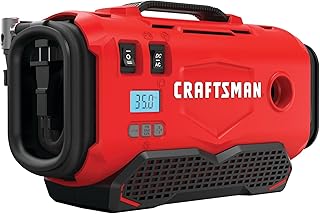 | CRAFTSMAN V20 Tire Inflator Portable Air Compressor Cordless and CordedCRAFTSMAN V20 Tire Inflator Portable Air Compressor Cordless and Corded | A more specific use case | Useful fit for a narrower use case | View on Amazon |
 | AstroAI AIRUN H Tire Inflator Portable Air Compressor, 12V DC Tire Inflator, Auto Shut-Off with Digital Pressure Gauge & LED Light, Fast Inflation for Car, Motorcycle, Bike Tires, 9.8Ft Cord, YellowAstroAI AIRUN H Tire Inflator Portable Air Compressor, 12V DC Tire Inflator, Auto Shut-Off with Digital Pressure Gauge & LED Light, Fast Inflation for Car, Motorcycle, Bike Tires, 9.8Ft Cord, Yellow | Buyers comparing another solid option | Alternative feature and price balance | View on Amazon |
A strong first pick for home garages because it matches the real tire-inflation workflow: quick top-offs, easy storage, and the option to inflate away from an outlet when needed.
Best for: Most buyers comparing the category
Key feature: Balanced overall feature set
Watch for: confirm how it’s powered in your use (battery vs 12V), check hose/cable reach to all four tires, and make sure the included adapters match what you inflate most.
| Pros ✅ | Cons ⚠️ |
|---|---|
| ✅ Versatile power approach for common home/vehicle use | ⚠️ Verify runtime expectations for your tire size and number of tires |
| ✅ Practical for routine PSI maintenance (not just emergencies) | ⚠️ Cord/hose length and storage format can make or break convenience |
| ✅ Good baseline pick to compare against more specialized options | ⚠️ Check included nozzles/adapters if you inflate bikes, balls, or inflatables |
Why it’s a top pick: For most drivers, the “best air compressor for car tires” is the one that’s ready when you need it. Easy storage, a power setup you can support, and simple controls matter more than flashy specs.
Decision bullets
WorkshopRanker tip: For any air compressor for tire inflation, convenience is a performance spec. When setup feels annoying, you delay topping off tires, and small leaks can turn into tire damage.
This compact pick fits buyers who prioritize small size and grab-and-go storage. It’s especially useful when your “inflation jobs” are mostly bikes, scooters, sports balls, and occasional car tire top-offs.
Best for: Value-focused buyers
Key feature: Strong value for the intended use
Watch for: compact inflators can mean more heat buildup and longer fill times on larger tires. Before buying, make sure it matches your tire size and your patience level.
| Pros ✅ | Cons ⚠️ |
|---|---|
| ✅ Easy to store in a vehicle, drawer, or small garage shelf | ⚠️ May be slower on larger-volume car/SUV/truck tires |
| ✅ Good fit for mixed household inflatables and bikes | ⚠️ Confirm it includes the adapters you actually need |
| ✅ Handy for quick PSI top-offs without dragging out bigger gear | ⚠️ Small format can mean more frequent recharging for repeated use |
Why it’s a top pick: “Best” doesn’t always mean biggest. If you only use a tire inflation compressor occasionally, the one you’ll actually keep charged and within reach is often the right call.
Decision bullets
WorkshopRanker tip: If you routinely maintain multiple vehicles or larger tires, a compact inflator can still work. Just expect longer sessions, and follow any cooldown guidance in the manual.
This dual-power style pick suits buyers who want one inflator that lives in the garage most of the time but can still come along for road trips. Because it plugs in, you don’t have to rely only on battery runtime.
Best for: Buyers who want stronger features
Key feature: Higher-spec or more capable configuration
Watch for: verify which power inputs are supported (home outlet vs vehicle 12V) and what’s included in the box (cords, adapters, storage).
| Pros ✅ | Cons ⚠️ |
|---|---|
| ✅ Flexible power options for garage and vehicle use | ⚠️ Dual-power designs can mean more cords and storage management |
| ✅ Good fit for routine garage top-offs without battery anxiety | ⚠️ Confirm included AC/DC cords and how they connect |
| ✅ Practical for multi-vehicle households | ⚠️ Verify reach to all wheels for your vehicle length and parking setup |
Why it’s a top pick: The most repeatable “garage air compressor for tires” experience is often plug-in power. With a dual-power design, you can keep that simple workflow at home while still covering basic roadside needs.
Decision bullets
WorkshopRanker tip: If your main goal is reliable routine maintenance at home, AC power is often the simplest path. The tradeoff is cord management.
This pick targets buyers who already own the matching cordless tool battery platform and want a cleaner, more integrated way to keep tires at the right PSI.
Best for: A more specific use case
Key feature: Useful fit for a narrower use case
Watch for: verify whether the battery and charger are included or sold separately. Next, confirm the corded power option fits how you’ll actually use it.
| Pros ✅ | Cons ⚠️ |
|---|---|
| ✅ Makes sense if you already own compatible batteries/charger | ⚠️ Battery ecosystem can raise total cost if you’re starting from zero |
| ✅ Convenient for repeated PSI checks and top-offs | ⚠️ Confirm what’s included (tool-only vs kit) |
| ✅ Cordless + corded flexibility can fit both garage and travel | ⚠️ Verify storage and reach for your vehicle layout |
Why it’s a top pick: Battery-platform inflators can be the most convenient “grab it and go” option. That convenience gets even better if you already keep charged packs in the garage for other tools.
Decision bullets
WorkshopRanker tip: When you compare cordless inflators, “best” often comes down to what you already own. Batteries, chargers, and your storage/charging routine can matter more than small spec differences.
This value pick is aimed at buyers who want a straightforward 12V tire inflator for car tires. It’s easy to keep in the vehicle for routine top-offs and basic emergencies.
Best for: Buyers comparing another solid option
Key feature: Alternative feature and price balance
Watch for: confirm how it plugs into your vehicle (12V outlet), check cord length for reaching rear tires, and follow any cooldown guidance for longer inflations.
| Pros ✅ | Cons ⚠️ |
|---|---|
| ✅ Simple 12V approach that’s easy to keep in the car | ⚠️ You’re limited by vehicle power and cord reach |
| ✅ Good fit for routine PSI maintenance and basic roadside use | ⚠️ Not as convenient as cordless if you inflate away from the vehicle |
| ✅ Strong shortlist option for budget-focused buyers | ⚠️ Verify included adapters if you need bikes/inflatables support |
Why it’s a top pick: A good-value tire inflation compressor isn’t about fancy features. Instead, it should be reliable, easy to use, and compatible with your vehicle layout so you can maintain pressure consistently.
Decision bullets
WorkshopRanker tip: If you have a larger SUV or pickup, prioritize reach and airflow realism over “max PSI” marketing. Big tires are about volume, not just pressure.
To recommend equipment that makes sense for online buyers, we focus on what changes real use and ownership:
Don’t buy this if…
Buy this if…
A tire inflation compressor for occasional top-offs is a different tool than what you’d want for repeated multi-vehicle use. If you inflate multiple cars weekly or manage larger tires, prioritize a format that can run longer without frustration because power source, heat management, and reach matter more than “max PSI.”
For tire inflation, the biggest mistake is shopping by maximum pressure alone. What affects real use is how the unit fits your workflow and tire volume, plus how consistently you can hit your target PSI.
Before ordering, verify the details that can make an inflator annoying or unusable. Check your vehicle’s 12V outlet access (if DC), outlet availability (if AC), battery/charger inclusion (if cordless), valve connection type, and adapters for Presta valves or inflatables.
If two products solve the same job differently, use the related WorkshopRanker comparison and setup guides supplied with the page. That context helps you understand the tradeoff before buying.
Small inflators live hard lives in trunks and toolboxes. Look for a practical storage shape, a readable display, simple controls, and a hose/cord setup that won’t kink or strain the fitting at the valve stem. Also, confirm whether extra nozzles are included if you inflate balls, pool toys, or air mattresses.
For portable inflators, “maintenance” is mostly about protecting the hose/cable, keeping the unit clean and dry, and storing it so the fittings don’t get crushed. When it uses a battery platform, long-term cost depends on battery health and replacement availability.
Inflators create heat and pressure, so follow the manufacturer’s instructions for maximum continuous run time, cooldown periods, and safe PSI limits for your tires. Never exceed the tire sidewall rating, and use care around moving vehicles and traffic when inflating roadside.
| Concern | Likely cause | What to check before buying |
|---|---|---|
| The inflator feels too slow on my tires | Tire volume is large (SUV/truck) or the inflator is optimized for compact use | Match the inflator format to your tire size; expect longer fills on larger tires and verify any cooldown guidance |
| I can’t reach the rear tires | Cord/hose reach is too short for your vehicle length and parking setup | Check total reach (power cord + hose) and where you’ll place the unit while inflating |
| Cordless use dies mid-job | Battery capacity/routine doesn’t match the workload | Confirm charging method, storage routine, and whether you need corded backup or dual power |
| PSI reading doesn’t match my gauge | Gauge accuracy variance or technique differences | Plan to verify with a separate tire gauge if precision matters; check how the unit measures and displays pressure |
| It won’t work with my bike tire | Valve type mismatch (Presta vs Schrader) or missing adapter | Confirm included adapters and compatibility with your bike’s valve type |
| It shuts off or overheats during use | Thermal protection or continuous-duty limits are being reached | Check manual guidance on continuous run time and cooldown periods; consider a different power/format for repeated use |
| The feature list feels confusing | Mixing cordless, 12V, AC, and “garage compressor” categories | Return to the real job: where you inflate, tire sizes, reach, power source, and repeat-use convenience |
Use the related WorkshopRanker guides below for deeper category-specific sizing, compatibility, setup, maintenance, and safety questions.
If the PAGE SPEC includes a sizing, specification, compatibility, comparison, setup, or maintenance guide, use the most relevant supplied [GUIDE:] placeholder naturally in this section.
For realistic expectations on airflow and pressure (especially if you’re comparing a portable inflator to a garage compressor setup), start with Cfm Psi For Tire Inflation and then use Air Compressor Size For Car Tires to sanity-check what “enough compressor” looks like for your vehicle.
Start with where you’ll inflate (garage vs roadside), your tire sizes (car vs SUV vs truck), and which power source you can reliably use (cordless, 12V, AC, or dual power). Next, compare reach, ease of use, and whether the included adapters match what you inflate.
For most drivers, you need enough real-world airflow to top off tires quickly and consistently. Because larger tires (SUV/light truck) need more air volume, compact inflators can take longer and may require cooldown breaks. Choose the format that matches your biggest tire and how often you’ll use it.
Max PSI alone is not a great predictor of tire inflation experience. Instead, trust the basics you can verify: power input type, cord/hose reach, whether it supports preset/auto shutoff, and whether it’s designed for your use case (bike-focused compact vs car-focused 12V vs dual-power home+car).
Confirm the valve connection and included adapters (Schrader vs Presta, plus inflatable nozzles), how it’s powered (12V socket, AC outlet, battery platform), total reach to all tires, and what’s included (cords, battery/charger, storage bag/case if relevant).
It can be if you inflate larger tires frequently, maintain multiple vehicles, or want a more “shop-like” experience with less waiting and fewer cooldown interruptions. For occasional use, a simpler 12V or compact cordless inflator can be the better value if it still fits your tire size and workflow.
Yes—if the listing clearly states power options, included accessories, reach (cord/hose length), return terms, and what’s included in the box (especially for battery-platform tools). Before ordering, also check storage size and durability expectations for anything that will live in a vehicle.
Power source fit, reach, and easy-to-use controls matter most. Preset/auto shutoff can be a strong convenience feature for consistent PSI, and a readable display/light can help at night. Finally, treat extras as a bonus after the inflator matches your tire size and typical use.
Check power input (12V/AC/battery), what’s included (cords, adapters, battery/charger), reach to all tires, storage size, and any stated continuous-run/cooldown guidance. If you’re shopping for a compressor for truck tires, be realistic about time and heat limits with small inflators.
If you want the safest first choice, start with Pick #1 because it gives you the cleanest baseline for job fit, power flexibility, reach, and ownership risk.
Choose Pick #2 when compact storage and grab-and-go portability matter most.
Choose Pick #3 when you want one unit for home outlet use plus vehicle 12V use.
Choose Pick #4 when you already own the tool-battery platform and want cordless convenience with a familiar ecosystem.
Choose Pick #5 when you want a simple, good-value 12V inflator for routine car tire maintenance.
For more context, continue with the related WorkshopRanker category hub and guides listed above.